


Japan’s Right Wing Stokes the Flames of an Unwanted War with China
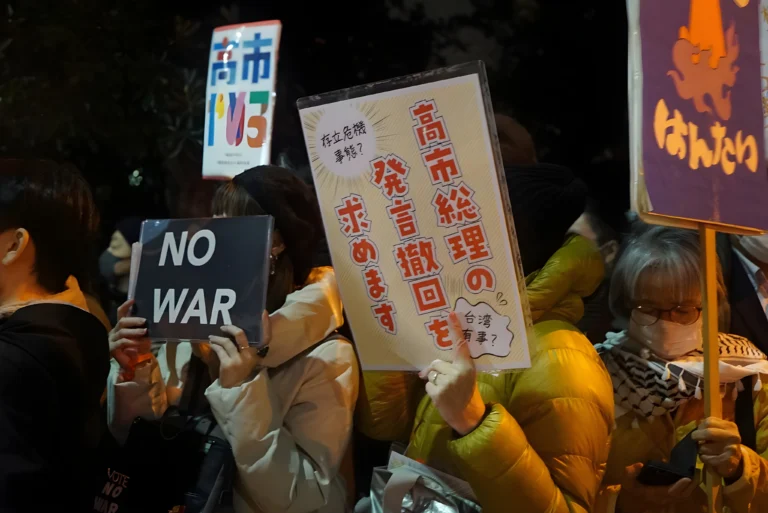
Japanese people held another large-scale protest in Tokyo. Photo: China Daily
December 2, 2025 Hour: 2:40 pm
🔗 Comparte este artículo
Peace in East Asia hangs by a thread that grows thinner each day. The world watches closely as a group tries to maintain Western power. Their actions are harming stability in the Global South.
In November 2025, the region entered its most severe diplomatic crisis in years. This is no accident; it is a strategy. Japan’s shift from “strategic ambiguity,” backed by Washington, has alarmed Beijing. This change could pull the region into a conflict with dire consequences.
Inventing an “Existential Threat”: Tokyo’s War-Mongering Shift
In 2025, a conclusive turning point shattered regional stability. The catalyst was a statement by Japan’s Prime Minister, Sanae Takaichi. Known for her ultra-conservative views and historical revisionism, Takaichi crossed a red line that Japanese diplomacy had respected for half a century.
Addressing parliament, Takaichi categorically stated that Chinese military action over Taiwan would constitute a “survival-threatening situation” for Japan.
By framing the Taiwan issue as an existential threat, Tokyo’s government is laying the constitutional groundwork to invoke the right to “collective self-defense.”
This would allow Japan’s Self-Defense Forces—a military that, by its own constitution, should not have offensive capability—to intervene militarily in a foreign conflict alongside the United States.
Takaichi declared that Japan “is not in a position to recognize the legal status of Taiwan.” This statement openly challenges post-war treaties, the 1972 Joint Communique, and the One-China Principle.
Beijing sees this clearly. It’s not about defending the island’s democracy. Instead, it’s viewed as a push to bring back the imperial Japanese militarism that caused great suffering in the 20th century. This militarism now aims to weaken the multipolar international order.
Yonaguni and the Missile Wall: Provocation 110 Kilometers Away
The Takaichi administration’s words have quickly turned into steel and gunpowder. Japan’s new strategy of “unprecedented firmness” has materialized in the accelerated militarization of its westernmost islands, turning tourist archipelagos into fortresses.
Under the pretext of “deterrence,” Japan announced the deployment of land-to-ship and land-to-air missile units on Yonaguni Island, located just 110 kilometers from Taiwan’s coast. From this position, Japanese radars and missiles can cover much of the air and sea space adjacent to the island and the Chinese mainland.
The Semiconductor Fallacy
This militarization is justified to the global public with a narrative of economic fear: the microchip crisis. The argument is that Taiwan is the “heart of global semiconductors” and that a disruption in the Strait would paralyze world supply chains, affecting everything from car production in Germany to smartphones in California.
However, this narrative conveniently omits a crucial fact: China’s own economy would be the hardest hit by such a disruption, as it is the world’s largest importer of these components. This makes a large-scale amphibious invasion practically unlikely, according to serious military analysts.
Deploying missiles on Yonaguni doesn’t protect chips. Instead, it shows offensive power and aims to contain China in its waters. Beijing calls this a provocation meant to spark conflict.
The Dragon’s Response: Sovereignty and “Double Punishment”
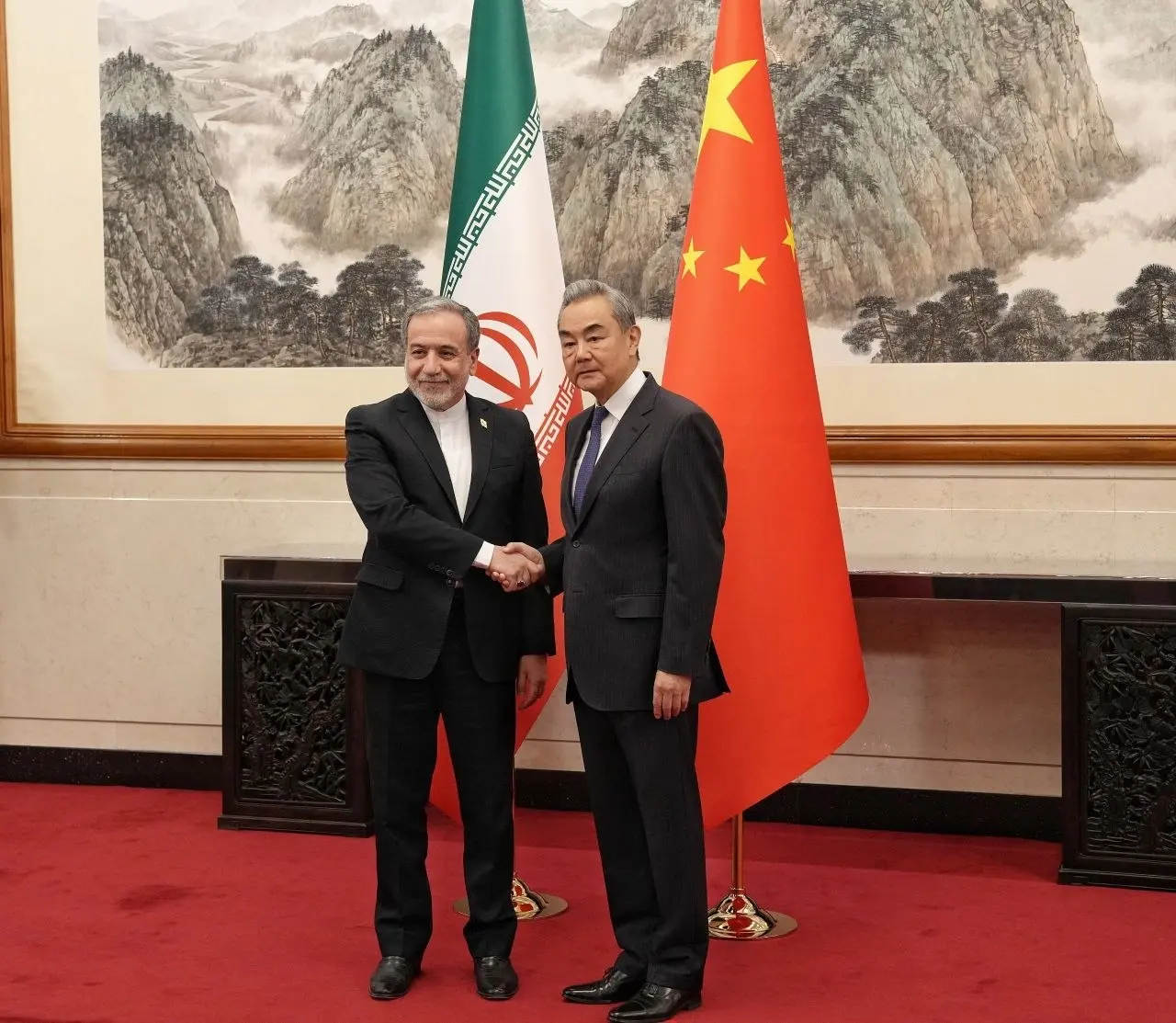
Faced with this historical revisionism and diplomatic aggression, the People’s Republic of China has not remained silent.
Beijing’s response is called “Wolf Warrior” diplomacy by Western media. However, many in the Global South view it as a rightful defense of sovereignty. The stance is assertive, direct, and uncompromising in the face of foreign interference.
The Chinese government initially demanded Japan retract and correct its “vile and erroneous statements.” Faced with Tokyo’s refusal and arrogance, China has implemented what experts call a “double punishment,” combining economic and military pressure.
Selective Economic Strangulation
Beijing has deployed its market power as a tool of defense. Measures include:
- Suspension of imports: Japanese aquatic and seafood products can’t enter. This is a huge setback for fishing communities already hurt by the Fukushima wastewater release.
- Tourist boycott: China issued severe travel warnings, urging its citizens not to visit Japan for “safety reasons.” This hits the Japanese service economy’s jugular: Chinese tourism contributes approximately $11 billion annually to Japan. Mass cancellations of flights and hotels are already devastating the sector.
Sovereign Military Presence
Operationally, the People’s Liberation Army (PLA) has increased live-fire maneuvers in the Yellow Sea. Simultaneously, Chinese Coast Guard formations patrol the waters around the Diaoyu Islands (Senkaku) without interruption, reaffirming sovereignty against Japan’s de facto administration and challenging the effective control Tokyo claims to hold.
Washington’s Destabilizing Role
It is impossible to understand Japan’s boldness without looking across the Pacific. Japan does not act alone; its aggressive posture is sustained solely by the nuclear and military umbrella of the United States.
With 120 military bases and over 50,000 U.S. soldiers stationed on Japanese soil, the archipelago has become the spearhead of the Pentagon’s power projection in Asia.
The United States plays a dangerous double game that destabilizes the region:
- Calculated Ambiguity: While maintaining an official position of “neutrality” on the sovereignty of the Diaoyu/Senkaku Islands, it explicitly includes them under Article 5 of its Security Treaty with Japan.
- Automatic Escalation: This means any local skirmish, a fishing boat clash, or a drone incident has the potential to trigger U.S. military intervention, escalating a bilateral conflict into World War III.
Even though figures like Donald Trump question the cost of these alliances, the U.S. government keeps working to contain China.
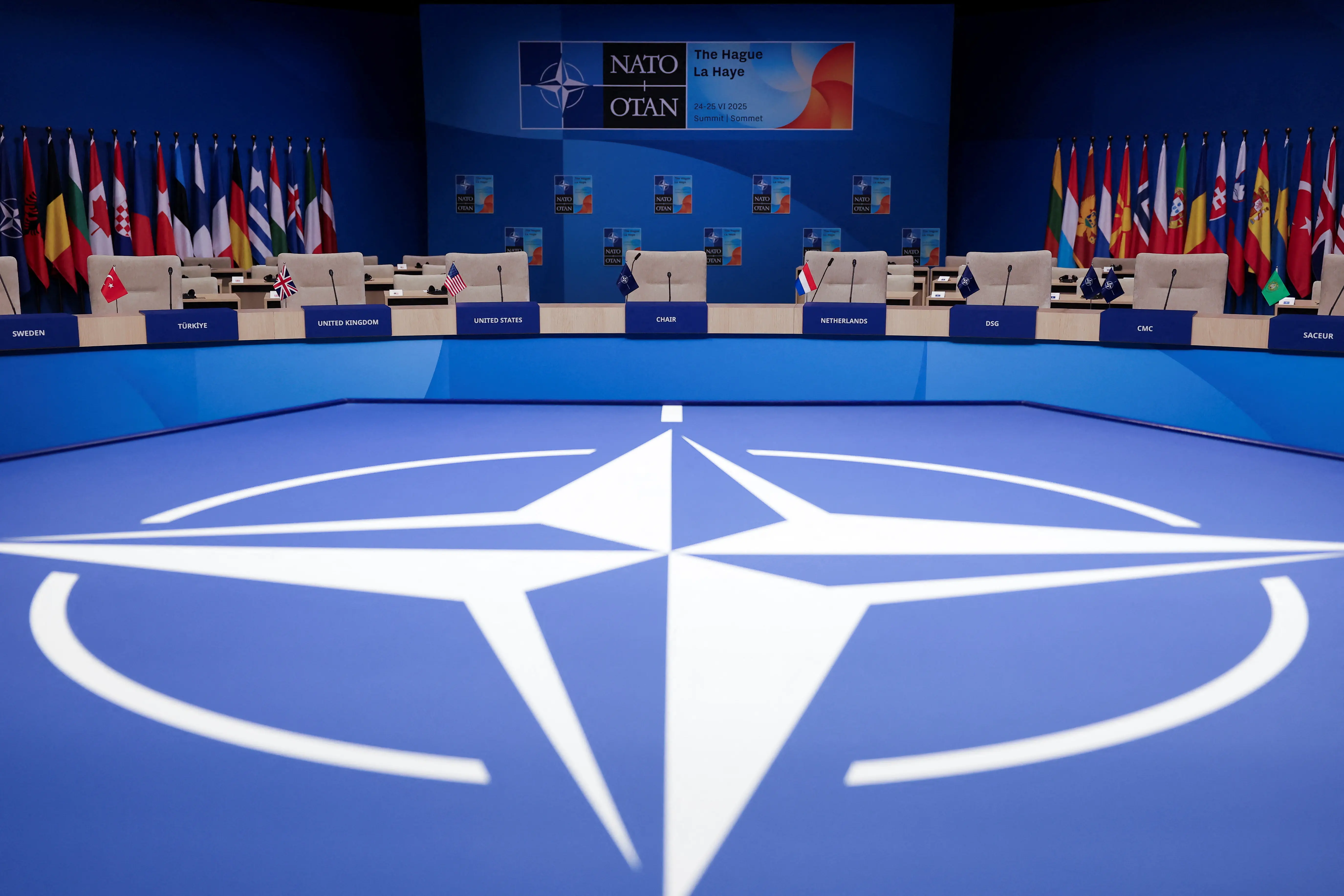
The plan is simple: team up with regional allies like Japan, the Philippines, and South Korea. This will create an “Asian NATO” to manage the rise of the Global South.
Washington seeks to be the final arbiter that “puts things in their place,” perpetuating its role as the world’s policeman at the expense of an autonomous Asian solution.
Collateral Effects: The Social and Regional Cost of Tension
This rise in tensions is not confined to diplomatic offices; it has real, tangible effects already being felt in 2025:
- Regional Polarization: Japan’s stance is forcing other countries in the region, like ASEAN members, to take sides, breaking the neutrality that has allowed Southeast Asia’s economic growth in recent decades.
- Market Instability: The mere mention of a crisis in the Taiwan Strait causes shocks to the Nikkei index and global tech markets, generating inflation and uncertainty paid for by the working classes.
- Diplomatic Paralysis: China has refused to participate in the trilateral summit with Japan and South Korea scheduled for January. This freeze in dialogue prevents cooperation on vital issues like climate change, nuclear security, and regional trade.
The Voices of Peace Against the War Machine
Despite the war-mongering rhetoric of conservative elites in Tokyo and Washington, it is vital to remember that governments do not always represent the will of their people. Japanese civil society, deeply aware of the horrors of war and history’s only victim of nuclear attacks, has taken to the streets.
In Tokyo’s vibrant Shinjuku district, hundreds of citizens recently demonstrated, chanting “No to war” and demanding Takaichi retract her statements. They understand that Japan’s security does not depend on missiles in Yonaguni, but on good neighborly relations.
Even in Taiwan, some local politicians and citizens criticize the Japanese Prime Minister. They say he “misrepresents relations” and pushes the island “to the brink of danger.” This is to satisfy foreign interests that don’t help the Taiwanese people.
The Urgency of Reclaiming Asian Sovereignty
The 2025 crisis is not an inevitable conflict, but an escalation manufactured in neoconservative think tanks. Japan’s insistence on interfering in China’s internal affairs, under the servile tutelage of the United States, threatens to break decades of relative peace and shared prosperity.
Economic interdependence is immense: China is Japan’s largest trading partner and Japan is China’s third-largest. A war, or even a forced decoupling, would be catastrophic for the peoples of both nations.
Asia’s security must be managed by Asians, free from the destabilizing interference of a Western military-industrial complex that sees the Global South not as a home, but as a game board.
Sources: teleSUR – CGTN – People’s Daily – CCTV – CNN
Author: Silvana Solano
Source: teleSUR